Jump to Bio:
Dr. Robert J. Swap | Dr. Jesse E. Bell | Joe Sanders
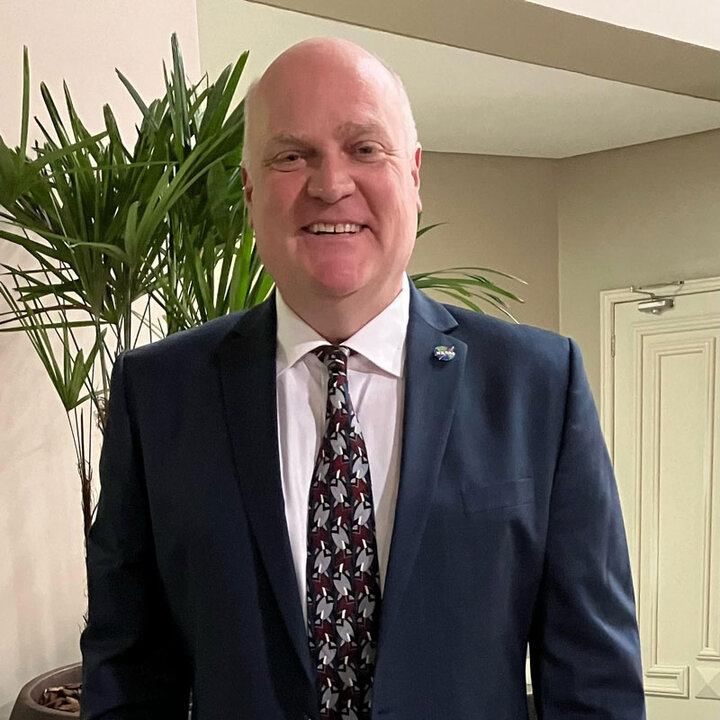
Dr. Robert J. Swap
Dr. Robert J. "Bob" Swap's four-decade career exemplifies the intersection of scientific excellence, visionary leadership, and global collaboration. His groundbreaking atmospheric sciences research revealed Saharan dust transport to the Amazon Basin, fundamentally advancing understanding of global biogeochemical cycles.
As Principal Investigator of the Southern African Regional Science Initiative (SAFARI 2000), he orchestrated highly interdisciplinary, multinational collaboration engaging over 200 scientists from 25 institutions across 16 countries spanning Africa, Europe, and North America. This work integrated atmospheric science, ecology, biogeochemistry, and social sciences to address coupled human-natural systems. Building on SAFARI's success, he founded the Eastern/Southern Africa Virginia Networks and Associations (ESAVANA), fostering North-South research partnerships and pioneering interdisciplinary approaches to global development challenges through education, research, and capacity building.
His educational excellence earned the prestigious 2012 Carnegie Foundation Virginia Professor of the Year award for interdisciplinary courses spanning environmental sciences, engineering, anthropology, and global development studies. Through cross-cultural service-learning in Southern Africa, he transformed student engagement with international development challenges. He later launched NASA's Student Airborne Research Program-East Coast, inspiring diverse, internationally-minded Earth system scientists.
As a practitioner of science diplomacy, Swap served as U.S. Embassy Science Fellow in Namibia and Fulbright Senior Specialist in Mozambique, building research capacity in developing nations. His leadership in the Inter-American Institute for Global Change Research demonstrates sustained commitment to bridging Global North and South. His 78 peer-reviewed articles spanning atmospheric sciences, ecology, development studies, and education research have garnered over 6,000 citations, reflecting deep interdisciplinary impact.
Most recently, as Associate Division Director for Mission Planning at NASA Goddard's Earth Sciences Division, he shaped strategic direction for a 1,400-person organization while fostering partnerships across government, academia, and international institutions.
Swap's unique combination of scientific rigor and cultural sensitivity positions him as an invaluable leader addressing global sustainability challenges through interdisciplinary approaches that bridge institutional divides while building capacity in the Global South.
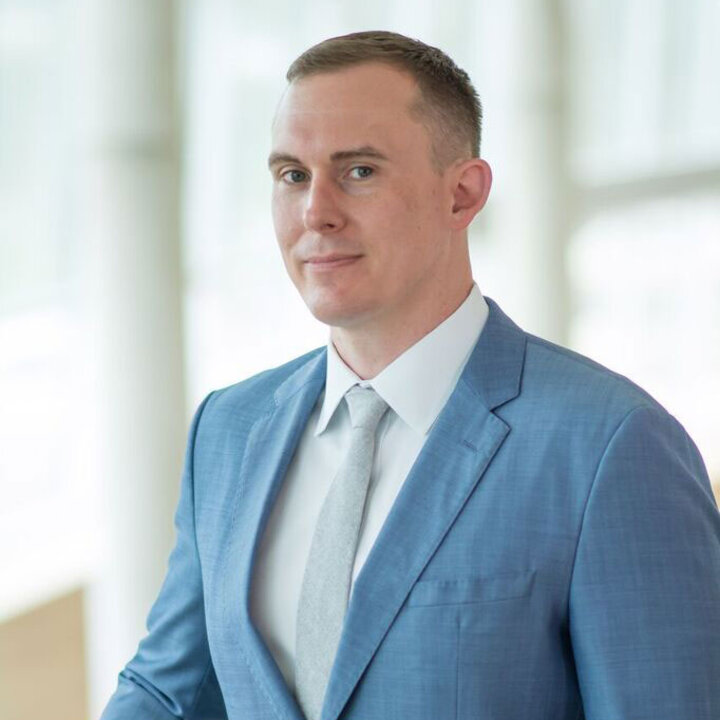
Dr. Jesse E. Bell
Dr. Jesse E. Bell is the Claire M. Hubbard Professor of Water, Climate, and Health in the Department of Environmental, Agricultural, and Occupational Health at the University of Nebraska Medical Center (UNMC) and holds a joint appointment in the School of Natural Resources within the Institute of Agriculture and Natural Resources at the University of Nebraska–Lincoln. He serves as director of the Water, Climate and Health Program at UNMC and director of Water, Climate and Health at the Daugherty Water for Food Global Institute at the University of Nebraska.
The mission of these programs is to advance interdisciplinary research, education, and collaborative solutions to public health challenges associated with environmental issues in Nebraska and around the world. As the founding director, he helped lead the develop of the mission, goals, and strategic vision for this collaborative initiative that has grown to currently support 19 faculty and staff, 17 students (PhD, MD, MPH, and undergraduate), and 6 affiliated faculty. His expertise and scholarship focus on understanding how human and natural processes are linked to changes in the environment and climate.
Prior to joining UNMC, Dr. Bell served in an interagency position between the National Oceanic and Atmospheric Administration (NOAA) and the Centers for Disease Control and Prevention (CDC). In this role, he developed innovative approaches to integrate NOAA data products into CDC operations and fostered collaboration between agencies to advance understanding of climate impacts on health.
Dr. Bell has authored more than 80 scientific articles, book chapters, and technical reports. He was a lead author of the U.S. Global Change Research Program report The Impacts of Climate Change on Human Health in the United States: A Scientific Assessment (released by the White House in 2016) and a contributing author of the Human Health chapter for the congressionally mandated Fifth National Climate Assessment. He is also an expert on the drought impacts on human health and helped with creating a national strategy document for NOAA on integrating public health into drought planning and preparedness in the United States.
Dr. Bell is a native Nebraskan and earned his Ph.D. from the University of Oklahoma.
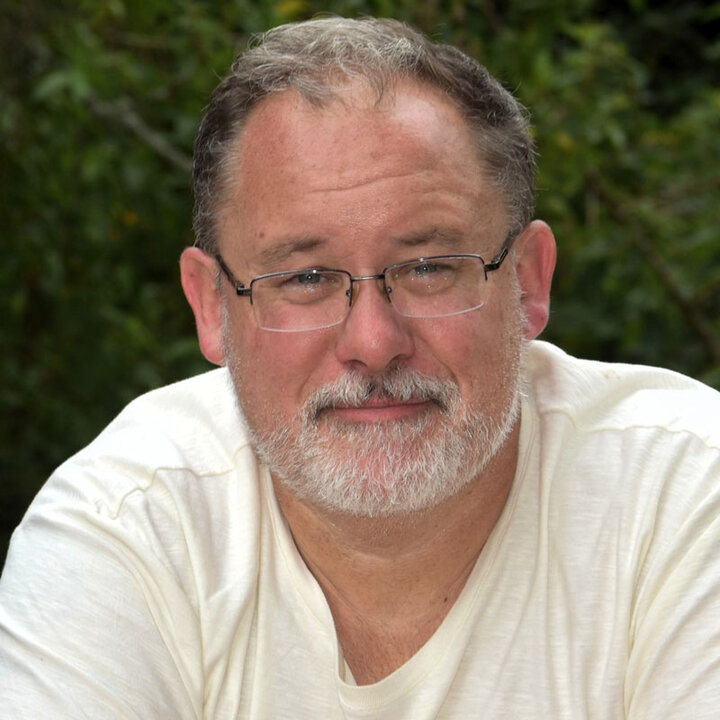
Joe Sanders
Joe Sanders is a senior international development leader with more than 27 years of experience designing and managing large-scale programs across Africa, Asia, and Latin America. He has led eight major USAID-funded initiatives totaling over $330 million, with a focus on agricultural market systems, food security, climate resilience, irrigation, WASH, youth livelihoods, and governance. Joe’s work is rooted in locally led solutions and long-term institutional strengthening. In Kenya and the wider East Africa region, he has spearheaded efforts to expand trade, strengthen agriculture and livestock markets, scale climate-smart technologies, and attract private sector investment. His teams have supported over 2,600 cooperatives and small businesses, improved access to finance and infrastructure, and increased economic opportunities for women and youth. He has also overseen integrated WASH and nutrition programs reaching more than a million people and helped build post-disaster and climate resilience in Zimbabwe, Nepal, Bolivia, and Afghanistan. Known for building high-performing teams and securing public-private partnerships, Joe has mobilized over $240 million in leveraged resources and worked closely with governments, civil society, and the private sector in complex, multi-stakeholder environments. He holds an M.Sc. in Managing Rural Development from the University of London and a B.Sc. in Biology from Catholic University of America. Fluent in Spanish and conversational in Dari and Quechua, Joe is based in Nairobi and brings a collaborative, forward-thinking approach to community engagement and applied research.